Metal, Reflection and Civilizational Allegory:
The Collecting Context of SHIH Li-Jen’s Sculpture
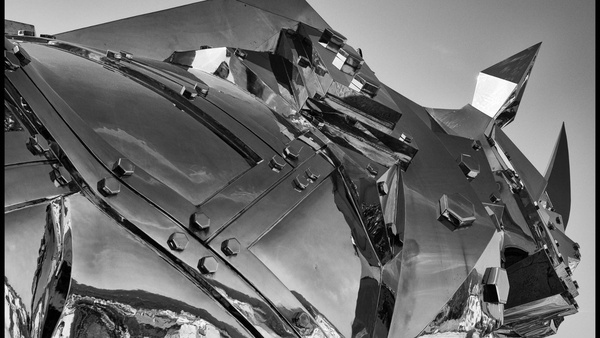
The artistic position of SHIH Li-Jen’s metal sculpture arises from the depth of a language developed over time: the rhinoceros as a totem of civilization, metal as a vessel of time, and public space as the field where artwork and viewers enter into relation. Together, these elements define the place of his sculpture within a broader contemporary context.
Shih’s rhinoceros series does not depend on the visual impact of a single work. Its strength lies in the stability and extension of an artistic language. Over the years, he has repeatedly returned to the image of the rhinoceros without allowing it to remain merely an animal form. Across different scales, materials and sites, the rhinoceros unfolds into a clear narrative line, one that continues to resonate with contemporary questions.
Recognizable form as a cultivated language
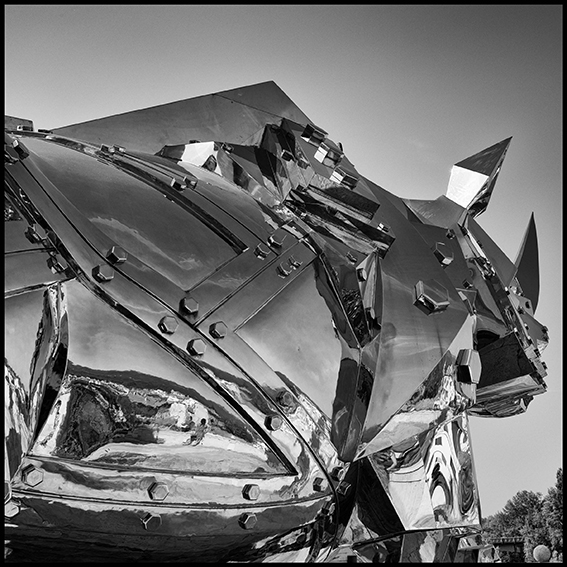
Visual recognition is a foundation through which an artistic position is established. Shih’s sculptures are immediately identifiable: the solid body, the uplifted horn, the fingerprint motif, and the geometric structure that merges mechanical force with biological presence. These elements give the works a strong spiritual tension wherever they are placed.
This recognizability does not come from repetition of form, but from sustained cultivation of a motif. In Shih’s work, the rhinoceros may become a tender guardian of family, or an image of human civilization itself. The subject remains clear, yet it continues to expand. This is what allows the work to maintain stability within a collecting and institutional field of vision.
Public art history as a cultural trace
The significance of the work is closely linked to its public history. King Kong Rhino has appeared in cities such as Venice, Taipei and Shanghai, leaving traces in different urban contexts. Its outdoor exhibition history demonstrates the work’s capacity to respond to the scale of the city, an important measure of sculptural influence within academic and institutional consideration.

When sculpture moves from the exhibition space into the street, its role is no longer confined to the object itself. It becomes absorbed into the environment and collective memory. This public dimension gives the work a deeper cultural resonance, allowing it to become a spiritual landmark that can be encountered repeatedly by the public.
Material context: metal as the measure of time
Shih’s use of bronze, stainless steel and titanium-finished metal is highly refined. The solidity and durability of these materials give the works a monument-like presence. Mirrored stainless steel in particular turns the surface of the sculpture into a reflective interface, absorbing light, environment and movement, so that the coolness of metal acquires a living dialogue with time and space.
Bronze preserves the tactile quality of the hand and carries a sense of historical depth, while stainless steel emphasizes speed, reflection and contemporary presence. Together, these materials create multiple dimensions within Shih’s sculpture, offering different possibilities for architectural, public and private contexts.
Continuity of scale: from landmark to intimate viewing
A mature body of work gains depth when its language can move across scale. Shih’s rhinoceros sculptures range from monumental public landmarks to tabletop works, forming a continuous spectrum. This continuity allows the artist’s thought to enter different kinds of spaces, from open civic sites to more intimate settings of daily viewing.
For viewers, this means that the work can be approached through different dimensions and materials. For institutions, it offers a way to consider the work in relation to architectural character, spatial identity and the atmosphere of a site.
A distinctive position in Taiwanese contemporary sculpture
Within Taiwanese art, few sculptors have continued to deepen a single motif while also developing a significant record in international public art. Shih takes the rhinoceros as his central image and brings together East Asian cultural resonance, contemporary industrial aesthetics and ecological awareness.
His work is not confined to local symbols. Instead, it addresses civilizational questions shared across cultures. Rooted in Taiwan yet open to international reading, Shih’s sculpture carries both local origin and cross-cultural legibility.
Metal body, civilizational reflection
The depth of Shih’s metal sculpture lies in the integration of form, material and public meaning. The works possess a strong visual identity and a long-developing artistic language, moving beyond decorative function to become carriers of symbolic and spiritual value.
Whether placed in private space, corporate architecture or public sites, Shih’s sculpture offers a stable and far-reaching cultural dialogue. Through the shifting light of metal, it reflects the contemporary condition in which nature and civilization are intertwined.
FAQ|Collecting Context
Why can SHIH Li-Jen’s metal sculpture sustain long-term viewing?
The rhinoceros form is solid and powerful, while the metal material can withstand environmental conditions. Whether placed in an open square or an interior space, the work holds its presence and relates naturally to its surroundings. Its meaning of guardianship allows the sculpture to gain spiritual depth over time through changing light and atmosphere.
How does King Kong Rhino resonate with the public?
Through international exhibition histories, including appearances in Venice, the rhinoceros has moved beyond a single artwork and entered the realm of public recognition. Once placed in public space, it becomes intertwined with urban history and viewers’ daily memory, gradually becoming a shared cultural symbol.
Do Shih’s rhinoceros sculptures maintain the same artistic core across different scales?
Yes. Across monumental works and tabletop sculptures, Shih preserves core details such as the fingerprint horn and geometric armor. This consistency ensures that the works continue to convey the same belief in guardianship and civilizational reflection, regardless of scale.